Loading...
Loading...
Loading...
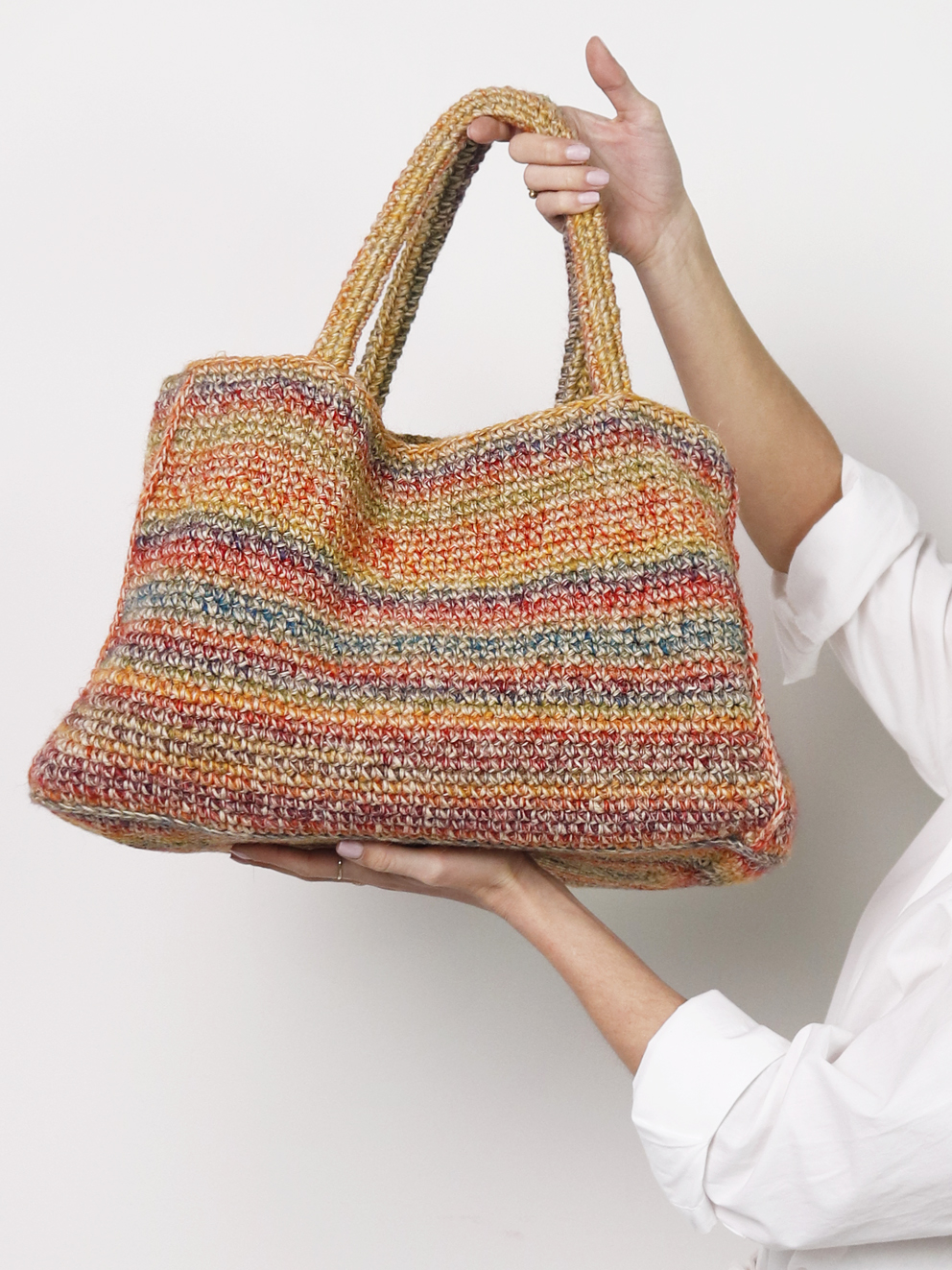
Jute is a yarn composed of three raw jute threads combined with a printed cotton thread. The jute provides structure, stability and character, while the cotton softens the stiffness, creating a perfect balance between strength and workability. The result is a yarn that glides nicely between the fingers, offers no resistance and is surprisingly fast to work with. The surface maintains a natural and authentic aesthetic, enriched by a flicker of color that makes it ideal for those who love the materiality of jute but don’t want to give up the vibrancy of color.
Jute is the ideal yarn for those looking for a natural material with a strong character, capable of combining authenticity, structure and contemporary design. Perfect for fashion accessories, textile jewelry, home decor.
Availability and packaging
Our Jute is available in 250 g spools, which can be purchased individually. Each package has a natural tolerance of ±3%.
Composition: 75% jute, 20% nylon, 5% cotton
Length: approx. 85 yards per 100 g / 93 yards per 3.5 oz
Each spool of Jute yarn is approx. 212 yards / 231.9 yards.
Yarn type: Chunky, Craft, Rug.
Yarn tension with needles: 13 stitches and 16 rows of knit low 10 x 10 cm / 4 x 4 in.
Yarn tension with crochet hook: 12 stitches and 14 rows of knit low 10 x 10 cm / 4 x 4 in.

Raw materials used in DHG's yarns are selected and purchased from areas of the world where each specific fiber expresses the best natural and performance qualities. Depending on the type, the fibers come from vocated and traditionally specialized regions, chosen to ensure high standards of purity, fineness and textile performance. Once selected, the fibers enter a transformation process that combines technical expertise and craftsmanship savoir-faire. In fact, yarns such as Juta are made through careful twisting, largely carried out with a still strongly artisanal approach in the textile district of Prato, a historic international center for fiber processing.
This balance between global sourcing and local processing allows the characteristics of each fiber to be maximized, resulting in yarns that combine quality, identity and manufacturing tradition.
With knitting needles, the stitches flow well on the iron without danger of slipping. In knitting with needles, the stitches appear even and well joined together, creating the appearance of a smooth, elegant fabric. It may happen that the first few knitting needles after starting tend to roll up and the side edges, although well aligned, tend a little toward a slanted right-hand pattern, which can be easily straightened already with the hands during knitting. In stitches, the shaved knit can be alternated with openwork and woven patterns, to great design and relief effect. Ribbed knits are not recommended because the yarn is not sufficiently elastic.
Withcrochet, one can use not only low links but also links of all heights because it is not a problem to have multiple cast-offs to have to keep on the crochet hook. Filet knitting, with high links alternating with chains, can also be used, for example for curtains and pillows. In crocheting, the presence of the jute determines the precise pattern of the links and provides stability to the work. The hook fits easily between the meshes, and the yarn, thanks to the spiral-wound thread, remains compact and allows for fast working.
With the loom, you work very well with comb-licking and 24:10 cm reduction.
Tips for working and care.

Our colors generally have high light fastness and wash fastness. Exceptions are fluorescent colors, which have low light fastness and may release color in the presence of alkaline or harsh soaps and with prolonged washing. The same applies to dark, bright colors. In all such cases, it is essential to test a small sample before starting the project, especially if these materials are combined with raw or light-colored fibers. In any case, it is always a good idea to dry artifacts away from direct sunlight, preferably in semi-shade.
A practical tip: Buying balls or spools of different baths can cause what is known as the barred effect: subtle variations in shade that seem invisible when comparing balls and spools, but become apparent once worked. Therefore, always be sure to buy some yarn in excess of what is needed for your project. We will be sure to send you spools and balls of the same lot.
Colors in real life.
Since colors may vary depending on your screen settings, we recommend purchasing our Color Card to check them in person before placing your final order.